
Visiting London as a Trans Woman: Transport, Hotels and Safety
Planning a trip to London as a trans woman? This practical guide covers trans-friendly hotels, hotel check-in and identification, public transport, late-night travel, dating safety, emergency contacts and what to do if you experience harassment or discrimination.

Visiting London as a Trans Woman: Transport, Hotels and Safety
London can make you feel glamorous, adventurous and completely lost within the same five minutes.
One moment you are admiring Buckingham Palace. The next, your map is telling you to walk through a wall while your hair fights a personal battle with the British weather.
Visiting any unfamiliar city requires a little preparation, but travelling as a trans woman can come with additional questions.
Will the hotel staff respect my name? What happens when my identification does not match my current appearance? Which area should I stay in? Is it safe to use the Tube at night? What should I do if someone harasses me?
These are reasonable questions. They should not stop you from enjoying London.
London has a large and visible LGBTQ+ community, hundreds of accommodation options and one of the most extensive public-transport systems in the world. The official Visit London website also maintains an LGBTQ+ London travel guide covering accommodation, attractions, nightlife and events.
This guide explains how to choose accommodation, manage hotel check-in, travel around the capital and protect yourself without allowing anxiety to take over your holiday.
Quick answer: A trans woman visiting London should choose accommodation near a well-connected station, check the hotel’s identification and cancellation policies, use the same contactless card or Oyster card for each journey, plan late-night transport before going out and save emergency reporting details on her phone. Most visits are uneventful, but preparation gives you more control if something uncomfortable happens.
Is London welcoming to trans women?
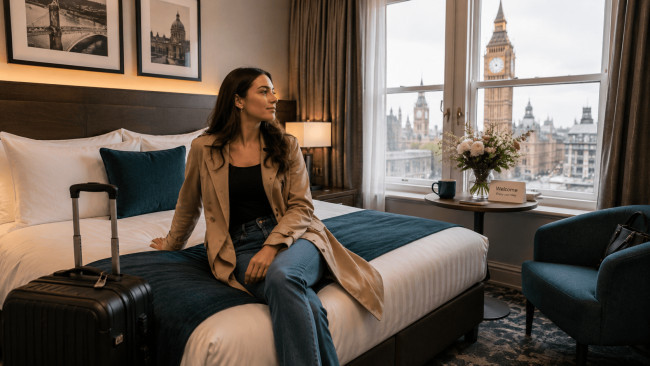
London is enormous, and there is no single experience that represents the entire city.
Many trans women live, work, date, travel and socialise in London without experiencing serious problems. The capital has established LGBTQ+ nightlife areas, queer cultural events, support organisations and specialist health services.
Soho remains one of London’s best-known LGBTQ+ areas, but queer bars, clubs and events are spread across Vauxhall, Clapham, east London and other parts of the city.
That does not mean every person, hotel employee or venue will behave perfectly. Staring, intrusive questions and misgendering can still happen.
Preparation is therefore helpful, but there is an important balance. You should know what to do if a problem occurs without spending your entire trip expecting one.
You are visiting London, not applying to become the next international secret agent.
Travelling alone can feel intimidating, particularly when you are presenting publicly in a new way. Our guide to building confidence as a trans woman offers practical advice for managing anxiety, self-consciousness and unwanted attention before your trip.
Understanding your rights as a trans visitor
The Equality Act 2010 includes gender reassignment as a protected characteristic. Its protections apply in areas including the provision of services, which can cover hotels, restaurants, shops and transport providers. A person does not have to complete medical treatment to fall within the Act’s definition of gender reassignment.
In simple terms, an ordinary business should not refuse to serve you or provide a worse service simply because you are transgender.
However, equality law contains exceptions relating to some lawfully established separate and single-sex services. This may be relevant to facilities such as particular spas, changing rooms, refuges or communal accommodation. Decisions concerning those services depend on the circumstances and whether the restriction can be legally justified.
A standard private hotel room is different from a shared changing room or a specialist single-sex service. If a hotel also has a spa, communal changing facilities or another sex-separated area, ask about that facility’s current policy separately.
This guide provides general practical information rather than individual legal advice.
How to choose a trans-friendly hotel in London
No symbol, badge or website statement can guarantee that every employee will always respond perfectly.
A rainbow flag is encouraging, but it is not magical fairy dust.
Instead of relying on one sign, look for several indications that a hotel takes inclusion seriously.
Check its equality policy
Look for a published policy mentioning gender reassignment, gender identity or transgender guests.
A vague sentence saying that “everyone is welcome” is better than nothing, but a detailed policy shows that the hotel has at least considered how staff should treat LGBTQ+ customers.
Read recent reviews
Search recent reviews for words such as:
- LGBTQ+
- transgender
- trans
- inclusive
- same-sex couple
- preferred name
- discrimination
- privacy
Do not judge a large hotel solely by one review, whether positive or negative. Look for patterns in how staff handle complaints, privacy and unusual requests.
Contact the property directly
You do not have to disclose that you are transgender.
However, contacting the hotel can be useful when you have questions about identification, your booking name, accessibility or privacy.
You could send:
Hello, I am considering booking a room from [arrival date] to [departure date]. Could you please confirm your identification requirements at check-in and whether the reservation name must exactly match the identification presented? I would also appreciate confirmation that the property has an inclusive anti-discrimination policy for transgender guests. Thank you.
The quality of the answer may tell you more than a colourful logo on the booking page.
A professional employee should answer the questions clearly. A reply that turns into an unnecessary investigation of your body, medical history or personal life is a good reason to spend your money elsewhere.
Use recognised LGBTQ+ travel resources
The International LGBTQ+ Travel Association provides travel information and listings from LGBTQ+-welcoming tourism businesses. Visit London also provides an official LGBTQ+ guide to the capital. These resources are useful starting points, although travellers should still check the individual property’s current policies and recent reviews.
Look at the exact location
A hotel saying it is “near Soho” may be around the corner—or a 35-minute journey away after somebody in the marketing department became overly imaginative.
Check:
- The precise address.
- The nearest station.
- The walking route from the station.
- Whether the route feels practical at night.
- How frequently you will need to change trains.
- Whether the station is step-free when required.
- Reviews mentioning street noise.
- The journey back from venues you plan to visit.
A cheaper room can become less attractive when every evening ends with two trains, a night bus and a walk through unfamiliar streets.
Hotel bookings, preferred names and identification
Hotel identification requirements can vary according to the property, booking platform, payment method and guest’s nationality.
Before paying, check:
- Whether photo identification is required.
- Which forms of identification are accepted.
- Whether the booking name must match the identification.
- Whether the payment card must be presented.
- What happens when someone else paid for the room.
- Whether a deposit or payment authorisation is required.
- The cancellation and late-arrival policy.
When your legal and preferred names are different
Where possible, make the reservation using the name shown on the identification you expect to present.
You can then ask the hotel to place your preferred name in its internal notes. For example:
The name on my identification is [legal name], but I use [preferred name]. Please ask staff to address me as [preferred name] during my stay. I would appreciate this information being handled privately.
Save a copy of the hotel’s response.
You may also want to carry:
- Your booking confirmation.
- The payment card used for the reservation.
- A copy of any written agreement with the hotel.
- A second form of identification where available.
- The booking platform’s customer-service details.
When your photograph looks different
Your identification photograph may have been taken before your transition or before changes to your hair, makeup or appearance.
If the receptionist needs to confirm your identity, you can calmly say:
The photograph is older, but this identification and reservation belong to me. Could we please discuss any additional questions privately?
You do not need the whole lobby listening while pretending not to listen. Privacy is a reasonable request.
Keep the discussion focused on confirming your identity and booking. You should not be expected to explain unrelated medical details merely to check into an ordinary hotel room.
Best London areas for trans and LGBTQ+ visitors
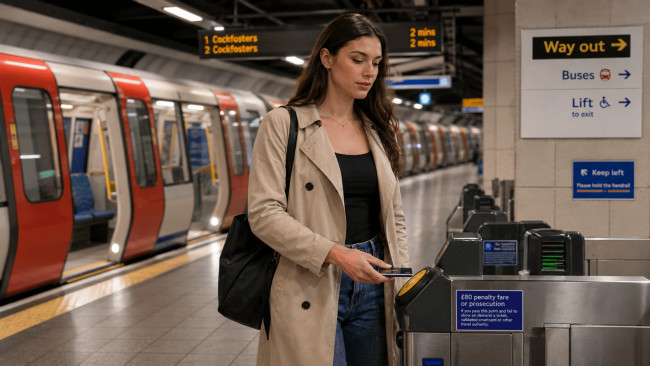
There is no universally perfect part of London. The best area depends on what you intend to do, your budget and how much noise you tolerate at 2am.
Soho and the West End
Soho is a convenient choice for visitors interested in LGBTQ+ nightlife, theatre, restaurants and central sightseeing.
The area contains a high concentration of LGBTQ+ bars and is close to Oxford Circus, Tottenham Court Road, Piccadilly Circus and Leicester Square stations. Visit London continues to describe Soho as one of the capital’s principal LGBTQ+ nightlife areas.
Good for:
- First-time visitors.
- Theatre trips.
- Central sightseeing.
- LGBTQ+ bars.
- Short weekend stays.
Things to check:
- Night-time street noise.
- Room size.
- Air conditioning.
- The exact distance from the nearest station.
- Whether the hotel is above or beside a late-night venue.
Before planning your evening, explore our guide to the best trans clubs in London. Event locations and schedules can change, so check the organiser’s official page before travelling.
Vauxhall
Vauxhall has a longstanding connection with London’s LGBTQ+ nightlife and provides access to the Victoria line, National Rail and numerous bus routes.
It can be convenient for visitors attending events south of the Thames or travelling into central London.
Good for:
- LGBTQ+ nightlife.
- Victoria line access.
- Events in south London.
- Visitors who do not need to stay directly in the West End.
Things to check:
- The walking route from the venue to the hotel.
- Late-night station entrances.
- Whether the event finishes after normal Tube hours.
- Street lighting around the accommodation.
King’s Cross and Bloomsbury
King’s Cross and Bloomsbury can be practical for visitors arriving through King’s Cross, St Pancras or Euston.
The location provides relatively easy access to Soho, the West End and many central attractions without placing you directly above the busiest nightlife streets.
Good for:
- Eurostar travellers.
- Rail connections.
- Museums and sightseeing.
- Quieter evenings than central Soho.
Things to check:
- Which station exit is closest.
- Whether the hotel is actually in Bloomsbury or using the name loosely.
- The walking route late at night.
Waterloo and the South Bank
Waterloo and the South Bank are convenient for theatres, riverside attractions and central sightseeing.
Waterloo has extensive rail, Underground and bus connections, while many major attractions are within walking distance.
Good for:
- Sightseeing.
- Theatre and cultural trips.
- Couples.
- Riverside walks.
- Rail connections.
Things to check:
- The exact distance from Waterloo station.
- How quiet the immediate street becomes at night.
- Whether your return journey requires crossing the river after the Tube closes.
Shoreditch, Hackney and Dalston
East London has a varied queer nightlife scene involving bars, performances, pop-up events and alternative club nights.
Unlike Soho, venues are often spread across several neighbourhoods. Planning the final part of your journey matters, particularly when an event takes place in an unfamiliar industrial or warehouse area. Visit London’s LGBTQ+ listings include venues across east London as well as the traditional central areas.
Good for:
- Alternative nightlife.
- Music and performance events.
- Independent restaurants.
- Returning London visitors.
Things to check:
- The nearest Overground or rail station.
- Last-train times.
- Night-bus alternatives.
- The route between the venue and station.
Stratford
Stratford can be worth considering when central hotel prices are high.
It has connections through the Central and Jubilee lines, Elizabeth line, DLR, London Overground and National Rail. The right hotel may offer a useful balance between price and transport access.
Good for:
- East London events.
- Elizabeth line connections.
- Visitors comparing a wider range of hotel prices.
- Longer stays.
Things to check:
- The actual journey time to your planned activities.
- Which Stratford station exit you need.
- Whether saving money on the room creates excessive daily travel.
Getting around London by public transport
London’s transport map can initially look as though a toddler discovered coloured pens and became extremely ambitious.
Fortunately, the system becomes much easier after your first few journeys.
Contactless cards and Oyster
Most visitors can use a contactless bank card, phone, smartwatch or Oyster card to pay as they travel.
Pay-as-you-go fares can be capped when the relevant conditions are met, meaning your eligible travel within the applicable zones will not continue charging indefinitely after you reach the daily or weekly cap.
Always use the same card or device
Your physical bank card, mobile phone and smartwatch may be treated as different payment methods even when they connect to the same bank account.
For example, touching in with your phone and touching out with your physical card can create two incomplete journeys. Switching between devices can also prevent your fares from being combined correctly for capping.
Choose one payment method and continue using it throughout the day.
When to touch in and out
On the Tube, DLR, Elizabeth line, London Overground and most National Rail journeys within the contactless area, touch in at the beginning and touch out at the end.
On buses and trams, you usually touch in only.
Do not allow two people to use the same contactless card for the same journey. Each traveller who needs a fare generally requires their own payment method or ticket.
Visitors using an overseas card should ask their bank whether international transaction charges apply.
Use the official TfL Go app
Download the TfL Go app before travelling.
It provides:
- Live arrival information.
- Current disruption notices.
- Tube, bus, Overground, DLR and Elizabeth line routes.
- Step-free journey planning.
- Station and toilet information.
- Routes with less walking.
- Alternative journeys during closures.
TfL updated the app in 2026 to provide additional fare-capping information for contactless customers.
Download it while you have reliable Wi-Fi, rather than waiting until you are underground with 3% battery and the expression of a woman questioning every decision that brought her there.
Step-free and accessible journeys
Not every Underground station is fully step-free. Some stations provide step-free access to the platform but still have a gap or step between the platform and train.
TfL Go and the official Journey Planner allow travellers to request step-free routes and check lift information. TfL recommends checking shortly before travelling because a lift closure can affect an otherwise accessible journey.
This can also be useful when:
- Carrying heavy luggage.
- Recovering from surgery.
- Experiencing limited mobility.
- Wearing heels that started the evening as fashion and ended it as a medical emergency.
Using London buses
London buses can be useful when Tube stations are closed, routes are disrupted or you simply want to see more of the city.
Remember:
- London buses do not generally accept cash.
- Touch your card or Oyster card when boarding.
- You do not normally touch out.
- Press the stop button before your destination.
- Check the direction shown on the bus stop.
- Night buses may use slightly different routes or stop locations.
Sitting near the driver or other passengers can feel more comfortable when travelling alone late at night.
Travelling around London at night
The Night Tube currently operates on Friday and Saturday nights on the Central, Jubilee, Northern, Piccadilly and Victoria lines. Services and branches can be affected by engineering work, so check the live status before leaving a venue.
London also has night buses and selected overnight rail or Overground services.
Before going out, save:
- Your hotel address.
- The nearest station.
- At least one alternative station.
- A suitable night-bus route.
- The details of a licensed taxi or private-hire app.
- Enough battery to complete the journey.
- A screenshot of the route in case your signal disappears.
Do this before the cocktails begin making confident transport decisions on your behalf.
Taxis and private-hire vehicles
Only licensed taxis, commonly called black cabs, can be hailed in the street or taken from an official taxi rank without a prior booking.
Private-hire vehicles or minicabs must be booked through a licensed operator. Do not enter an unbooked vehicle because somebody standing outside a nightclub says, “Taxi?” in a convincing voice.
Before entering a booked vehicle:
- Check the registration number.
- Confirm the vehicle make and model.
- Check the driver’s name and photograph in the app.
- Ask the driver who the booking is for instead of immediately giving your name.
- Share the journey details with someone you trust.
- Follow the route on your phone.
- End the journey in a busy area if the driver’s behaviour concerns you.
Staying safe without allowing fear to ruin your trip
Safety advice should give you choices, not convince you that danger is waiting around every corner.
Nothing can guarantee complete safety, and responsibility for harassment always belongs to the person committing it—not to the woman targeted.
The following precautions are simply tools you can use when they make you feel more secure.
Keep your hotel details private
Avoid posting your hotel name, room number or live location publicly.
When meeting someone for the first time, choose a location away from your accommodation. Do not provide your room number until you genuinely trust that person.
Hotel employees should not announce your room number loudly. You can ask them to write it down or point to it instead.
Protect your phone
Your phone may contain:
- Hotel reservations.
- Travel tickets.
- Banking access.
- Maps.
- Emergency contacts.
- Dating conversations.
- Identification copies.
- Private photographs.
Use a secure screen lock and enable device tracking. Carry a portable charger and store your hotel address somewhere accessible offline.
Tell someone where you are going
When attending an unfamiliar event or meeting a new person, send a trusted friend:
- The venue name.
- The person’s profile or telephone number.
- Your planned transport route.
- Your expected return time.
- A time when you will check in.
Agree on a simple phrase that means you need them to call you or help you leave.
If travel, dating or public attention becomes emotionally exhausting, our guide to mental wellbeing for trans women in the UK discusses anxiety, boundaries, rejection and looking after yourself.
Trust discomfort
You do not need courtroom-quality evidence before leaving an uncomfortable situation.
Pay attention when someone:
- Repeatedly ignores your boundaries.
- Pressures you to drink more.
- Attempts to separate you from friends.
- Becomes angry when you say no.
- Insists on knowing your hotel.
- Tries to control your journey home.
- Makes intrusive comments about your body.
- Refuses to respect your name or privacy.
You can leave without debating the issue. Your safety is more important than appearing polite.
Meeting dates and new people in London
London can be an exciting city for dating, but the same basic precautions apply whether you meet someone through an app, a bar, a social event or mutual friends.
Our detailed London trans dating guide explains where people meet, how to create safer dating boundaries and how to approach trans women respectfully.
Meet in public first
Choose a café, restaurant, hotel bar or other public venue for the first meeting.
A stranger’s home or your hotel room should not normally be the first meeting point.
Arrange your own transport and keep enough money or battery power to leave independently.
Do not reveal your room number immediately
Meeting somebody in your hotel bar does not mean they need to know your room number.
Allow trust to develop gradually. A respectful person will understand reasonable safety boundaries.
Keep control of your drink
Order your own drink where possible and do not leave it unattended.
If a drink looks, smells or tastes unusual—or you suddenly feel much more intoxicated than expected—tell venue staff or someone you trust immediately. Move to a safe area and seek medical or police assistance when needed.
Discuss expectations clearly
Trans women are often subjected to fetishising questions that would make even the most patient woman consider throwing her handbag into the Thames.
You are entitled to set boundaries around:
- What language someone uses.
- Questions about your body.
- Physical contact.
- Photographs.
- Privacy.
- Sexual activity.
- Condom use.
- Whether the meeting continues.
Consent can be withdrawn at any time.
Looking after your sexual health while travelling
A holiday romance, date or spontaneous connection can be exciting. Personal safety also includes sexual health and clear consent.
Carry any protection you may need rather than relying on another person to provide it. Discuss boundaries before intimacy and do not allow someone to pressure you into an activity that feels unsafe.
Our guide to sexual health for trans women covers testing, PrEP, PEP, condoms, lubricant, consent and confidential healthcare.
Visitors who need a test or advice in the capital can also read STI Testing in London: What Every Sex Worker Needs to Know.
For guidance on choosing a testing schedule, see How Often Should You Get a Sexual Health Check?.
Sexual-health information is general. Contact a qualified healthcare professional for advice based on your body, medication and circumstances.
What to do if you experience harassment on public transport
Move towards:
- Other passengers.
- A staffed ticket area.
- The driver or conductor.
- A station help point.
- Transport staff.
- A well-lit public place.
Call 999 when there is an immediate danger, violence, a threat of violence or a crime in progress.
For non-emergency incidents on trains, at railway stations or on the London Underground, British Transport Police accepts reports by text on 61016 or by telephone on 0800 40 50 40. Incidents involving buses or roads can be reported to local police through 101 when they are not emergencies.
The British Transport Police 61016 service can be used to report behaviour that does not require an immediate emergency response.
Write down, when safe:
- The time.
- Station or stop.
- Train line or bus route.
- Carriage number where visible.
- A description of the person.
- What was said or done.
- Witness details.
- The name of any employee you spoke to.
Your immediate safety matters more than gathering evidence. Do not follow or confront somebody solely to obtain a photograph.
Reporting transphobic hate crime
You can report a hate crime even when you are uncertain whether the incident meets the legal definition. The police can assess the report.
Call 999 when:
- Someone is in immediate danger.
- Violence is occurring.
- Violence is being threatened.
- The suspect is still at the scene.
- A serious crime is happening.
Non-emergency incidents can be reported through 101 or the Metropolitan Police online reporting service.
Reporting is a personal decision. Some people report immediately; others need time or support. Neither response makes the experience less real.
What to do when a hotel treats you badly
There is a difference between an accidental mistake and persistent discriminatory treatment.
A receptionist may use the wrong title once, apologise and correct themselves. That is different from repeatedly mocking you, exposing private information or refusing ordinary accommodation because you are trans.
When a problem occurs:
- Explain clearly what happened.
- State what outcome you want.
- Ask to speak privately with the duty manager.
- Record the employee’s name and the time.
- Save emails, receipts and booking messages.
- Ask for the hotel’s formal complaints procedure.
- Make the complaint in writing.
- Contact the booking platform when it handled the reservation.
- Keep copies of every response.
- Seek specialist advice when you believe discrimination occurred.
You can say:
I believe I am being treated differently because I am transgender. I would like this matter handled privately by the duty manager, and I would like a written record of my complaint.
You do not need to perform a dramatic courtroom speech beside the breakfast buffet. Calm, specific facts are normally more useful.
The Equality Advisory Support Service provides information concerning discrimination and human-rights issues. Its current telephone number is 0808 800 0082, and its textphone number is 0808 800 0084.
Packing checklist for a London trip
Before leaving home, check that you have:
- Passport or accepted photo identification.
- Hotel reservation confirmation.
- The payment card used for the booking.
- A second payment option.
- Travel-insurance details.
- Copies of important documents stored securely.
- Prescription medication in suitable packaging.
- A UK plug adaptor when required.
- Portable phone charger.
- Charging cable.
- Emergency contact details.
- Hotel address saved offline.
- TfL Go or another reliable journey app.
- Comfortable walking shoes.
- A small umbrella.
- Clothing for changing weather.
- Any safer-sex supplies you may need.
The comfortable shoes are not a surrender of glamour. They are the wisdom that comes after London has taught you a lesson through your feet.
Quick safety contacts
| Situation | Contact |
|---|---|
| Immediate emergency or danger | 999 |
| Non-emergency police assistance | 101 |
| Non-emergency rail or Underground incident | Text 61016 |
| British Transport Police telephone | 0800 40 50 40 |
| Equality Advisory Support Service | 0808 800 0082 |
| EASS textphone | 0808 800 0084 |
Save these details before your trip rather than trying to search for them while stressed.
Frequently asked questions
Is London safe for trans women?
Many trans women visit, live and socialise in London without serious incidents, but no large city is completely free from risk. Choose well-connected accommodation, plan late-night journeys and protect your private information. Call 999 when there is immediate danger and use the relevant non-emergency reporting channels when an urgent response is not required.
Are there trans-friendly hotels in London?
London has many hotels that market themselves as LGBTQ+ welcoming, but experiences may vary between properties and employees. Check recent reviews, read the equality policy and contact the hotel with specific questions before booking. An LGBTQ+ travel-network membership can be a useful sign, but it is not an absolute guarantee.
Can a hotel refuse me because I am transgender?
The Equality Act 2010 protects people with the characteristic of gender reassignment in the provision of services. An ordinary hotel should not refuse standard accommodation simply because a guest is trans. Some separate or single-sex facilities may involve specific legal exceptions, so policies covering spas or communal changing areas should be checked separately.
Will a London hotel ask for identification?
Some hotels request photo identification, the payment card used for the reservation or other check-in information. Requirements vary. Check the individual hotel’s policy before travelling, particularly when your reservation name differs from the name on your identification.
What should I do when my identification has my old name?
Book using the name appearing on the identification you intend to present, and ask the property to add your preferred name privately to the booking notes. Keep a copy of the hotel’s written response and ask to discuss any identification questions away from other guests.
What is the easiest way to pay for London transport?
Many visitors use contactless payment or an Oyster card. Continue using the same card or device throughout the day so eligible journeys can be combined correctly for fare capping.
Does the London Underground run all night?
Selected Night Tube lines operate on Friday and Saturday nights. These currently include the Central, Jubilee, Northern, Piccadilly and Victoria lines. Closures and engineering works can affect services, so check TfL Go immediately before travelling.
What is the safest way to return to my hotel at night?
Use a planned public-transport route, a licensed black taxi or a private-hire vehicle booked through a licensed operator. Check the registration and driver details before entering a booked vehicle, share the journey and keep enough phone battery to follow the route.
What should I do if somebody harasses me on the Tube?
Move towards other passengers or staff. Call 999 in an emergency. For a non-emergency rail or Underground incident, text British Transport Police on 61016 or call 0800 40 50 40.
Where can I meet people safely in London?
Dating apps, public social events, LGBTQ+ venues and introductions through friends are common options. Meet in a public place first, arrange your own journey and avoid immediately sharing your hotel details. Read our guide to trans dating in London for more advice.
Final thoughts from Melissa
Visiting London as a trans woman does not need to begin with fear.
Preparation is not the same as expecting something bad to happen. It simply means knowing where you are staying, how you are returning, what your boundaries are and who you can contact when somebody behaves badly.
Choose a hotel that communicates respectfully. Keep your booking and identification organised. Plan your transport before the final Tube becomes a distant memory. Meet strangers in public and listen to your instincts.
Most importantly, give yourself permission to enjoy the city.
Take photographs. Visit the galleries. Try a restaurant you have never heard of. Wear the outfit you packed “just in case.” Go dancing. Order dessert.
London is enormous, dramatic, slightly exhausting and full of possibilities.
There is room in it for you too.
Continue reading
- The Best Trans Clubs in London
- Where to Date Transsexual Women in London
- How to Build Confidence as a Trans Woman
- Mental Wellbeing Tips for Trans Women in the UK
- Sexual Health Tips Every Trans Woman Should Know
- STI Testing in London: What Every Sex Worker Needs to Know
- How Often Should You Get a Sexual Health Check?
Corrections and updates
Have we missed something? Hotel policies, transport services, emergency information and London venues can change. Readers can report inaccurate or outdated information through our contact page. Please include the article address, the information concerned and a reliable supporting source where possible.








Comments
0 comment